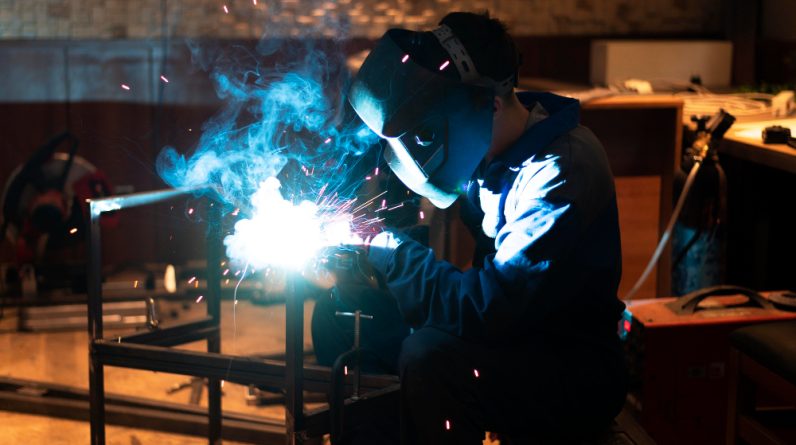
Welding is more than just fusing metals together; it’s an art, a science, and a craft that plays a critical role in shaping our modern world. From towering skyscrapers to intricate machinery, welders are the backbone of countless industries. But what does it take to enter this exciting field? Let’s explore the education and training requirements for becoming a welder, step by step.
Understanding Welding
Welding involves joining metals by heating them to their melting points and often adding a filler material. It’s a versatile skill used in construction, manufacturing, automotive repair, and even art.
Common Types of Welding Processes
MIG Welding (Metal Inert Gas Welding)
MIG welding, also known as Gas Metal Arc Welding (GMAW), is one of the most beginner-friendly methods. It uses a wire electrode and shielding gas, making it ideal for automotive repairs and light fabrication.
TIG Welding (Tungsten Inert Gas Welding)
TIG welding offers precision and high-quality results, commonly used in aerospace and automotive industries. It’s challenging to learn but essential for detailed and aesthetic work.
Stick Welding (Shielded Metal Arc Welding)
Stick welding is a robust technique used in outdoor and heavy-duty projects. It’s versatile and works well in various environments, even with rusty or dirty materials.
Other Techniques
- Flux-Cored Arc Welding (FCAW): Ideal for high-speed applications in construction.
- Plasma Arc Welding (PAW): A specialized process for precise, high-energy welds.
- Underwater Welding: A unique skill requiring additional certifications for marine applications.
Basic Educational Requirements
High School Diploma or GED
To start your welding journey, a high school diploma or GED is typically the minimum requirement. Here’s why it’s important:
- Math Skills: Understanding measurements, angles, and basic algebra is essential for accurate welds.
- Science Knowledge: Basic physics and chemistry help in understanding heat and material properties.
- Shop Classes: If available, shop classes provide hands-on experience with tools and equipment.
Recommended High School Courses
- Mathematics (Algebra, Geometry)
- Physics
- Mechanical Drawing
- Metalworking or Industrial Arts
Technical Training and Certifications
Formal training and certifications are vital for becoming a skilled and employable welder.
Welding School Programs
Welding schools offer intensive training, covering everything from basic techniques to advanced processes. Programs typically last from a few months to two years and include:
- Welding safety
- Blueprint reading
- Various welding methods
Community College and Vocational Programs
For a more affordable and flexible option, community colleges and vocational schools provide welding courses. These institutions often offer part-time programs for working students and focus on practical skills.
Certifications for Welders
Certifications validate your skills and increase job prospects. Key certifications include:
- American Welding Society (AWS): Offers certifications like Certified Welder (CW) and Certified Welding Inspector (CWI).
- National Center for Construction Education and Research (NCCER): Provides standardized assessments.
- Specialized Certifications: Underwater welding, pipe welding, and aerospace welding require specific credentials.
Apprenticeships in Welding
Apprenticeships blend classroom instruction with hands-on experience under the guidance of experienced welders. These programs typically last 3-4 years and allow you to:
- Earn a salary while learning
- Build professional connections
- Gain industry-recognized qualifications
Finding an Apprenticeship
- Apply through local unions or trade organizations.
- Explore opportunities with employers in construction or manufacturing.
On-the-Job Training
Many companies offer on-the-job training for entry-level welders. This approach focuses on practical skills and allows you to learn workplace-specific techniques.
Advanced Education for Specialized Welding
Specialized Certifications
- Underwater Welding: Requires commercial diving certification and additional training for marine welding.
- Aerospace Welding: Focuses on precision welding for aircraft and spacecraft components.
- Nuclear Welding: Demands rigorous training for work in nuclear facilities.
Welding Engineering Degrees
For those aiming for leadership roles or advanced technical expertise, pursuing a degree in welding engineering or metallurgical engineering is an excellent choice. These programs typically take 4 years and open doors to higher-paying opportunities.
Skills Required to Succeed as a Welder
To thrive as a welder, you need more than just technical know-how. Key skills include:
- Technical Skills: Proficiency in various welding techniques and equipment.
- Physical Abilities: Good hand-eye coordination, dexterity, and physical stamina.
- Soft Skills: Problem-solving, attention to detail, and effective communication.
Cost of Becoming a Welder
Estimated Costs
- Welding school: $5,000 to $20,000
- Certifications: $200 to $1,000 per certification
- Tools and equipment: $500 to $2,000
Financial Assistance
- Scholarships from trade organizations like AWS
- Grants and loans through FAFSA
- Employer-sponsored training programs
Career Opportunities in Welding
Entry-Level Roles
- Welder Helper
- Junior Welder
- Fabrication Assistant
Specialized Jobs
- Pipe Welder
- Underwater Welder
- Structural Welder
Industries Hiring Welders
- Construction
- Manufacturing
- Shipbuilding
- Oil and Gas
- Aerospace
Challenges and Rewards of Being a Welder
Challenges
- Physical demands
- Exposure to hazardous materials
- Long working hours
Rewards
- Job stability
- Competitive salaries
- Opportunities for travel and specialization
Steps to Start Your Welding Career
- Complete high school or obtain a GED.
- Enroll in a welding program or apprenticeship.
- Obtain necessary certifications.
- Gain hands-on experience through on-the-job training.
- Build a professional network and keep learning.
Tips for Aspiring Welders
- Stay Updated: Welding technology is constantly evolving, so continuous learning is crucial.
- Prioritize Safety: Always wear protective gear and follow safety protocols.
- Practice Regularly: Welding is a skill honed through practice and persistence.
Conclusion
Becoming a welder is an achievable goal with the right education, training, and determination. Whether you start with a high school diploma or pursue advanced certifications, welding offers a rewarding and stable career path.
FAQs
- What is the minimum education needed to become a welder?
A high school diploma or GED is usually required. - How long does it take to become a certified welder?
Most programs range from 6 months to 2 years, depending on the certification. - Can I become a welder without formal training?
Yes, on-the-job training or apprenticeships can provide the necessary skills. - What is the average salary for welders?
Welders typically earn between $40,000 and $60,000 annually, with specialized roles paying more. - Is welding a good career choice for the future?
Absolutely! With growing demand in various industries, welding offers excellent job prospects.